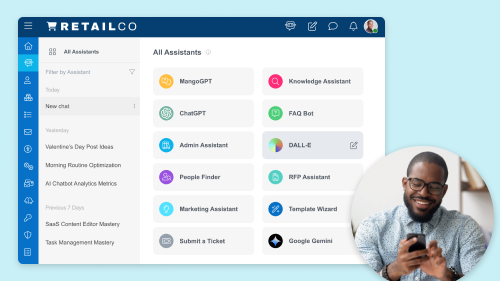
HR teams today manage an ever-expanding list of responsibilities—from recruitment and onboarding to employee engagement and retention. Employee Self-Service (ESS) Hubs answer that pressure directly: they are digital platforms that centralize HR services so employees can manage their own HR needs around the clock, without waiting on HR staff. The result is measurable—organizations that have launched branded self-service employee apps have reported 87% workforce engagement within a few months of going live. This article explains what ESS Hubs are, how they work, and how to evaluate and implement one successfully.
ESS Hubs represent a significant leap forward in the digital transformation of HR processes. By centralizing access to HR services and information, these platforms allow employees to manage a wide array of tasks independently, from updating personal information and accessing pay stubs to requesting time off and enrolling in benefits programs. This shift towards self-service not only enhances operational efficiency by reducing the administrative burden on HR teams but also aligns with the contemporary ethos of autonomy and empowerment in the workplace.
The impact of ESS Hubs extends far beyond operational efficiencies. At the heart of this digital transformation is a profound enhancement of the employee experience. By providing a user-friendly, accessible, and intuitive platform, ESS Hubs cater to the modern employee's expectation for immediacy and convenience.
This on-demand access to HR services fosters a sense of empowerment among employees, enabling them to take charge of their HR-related needs without the delays and dependencies traditionally associated with HR processes. The result is a more engaged, satisfied, and productive workforce, which is pivotal in driving organizational success in today's competitive landscape.
Challenges Faced by HR Teams Today
HR departments are often inundated with a high volume of routine queries and administrative tasks that can be both time-consuming and repetitive. Add to this the pressure of providing personalized support to a diverse workforce and maintaining compliance and security in an increasingly remote or hybrid work environment, and it's clear why the traditional HR model is under strain.
The information fragmentation problem compounds the burden. Employees navigate 6–8 disconnected tools daily, and per IDC, they spend an average of 2.5 hours per day searching for information. Despite this, per Social Edge Consulting, only 13% of employees use an intranet daily, nearly a third never log in at all, and the average daily time spent using intranet tools is just six minutes per day, per SWOOP Analytics. ESS Hubs directly consolidate that fragmentation into a single employee experience platform.
With employees taking the lead on managing their HR-related transactions through an ESS, however, HR teams are afforded the bandwidth to focus on more strategic initiatives. This includes developing comprehensive employee engagement programs, crafting personalized career development plans, and implementing innovative retention strategies. The shift from administrative tasks to strategic focus not only enhances the role of HR within the organization but also contributes to a more dynamic, agile, and forward-thinking HR function.
Understanding Employee Self-Service Hubs
An ESS Hub is an online platform that serves as a centralized point for employees to access a wide array of HR-related services and information. Think of it as a digital employee support office that's open 24/7, without the need for physical presence or paperwork. It's where employees can go to find instant answers to their HR questions, complete essential HR tasks, and manage their employment-related needs with autonomy and ease. It also has a working understanding of company knowledge and training libraries, ensuring context-driven responses, and tailors its responses to the individual needs of each employee.
How ESS Hubs Work
The functionality of an ESS Hub can be broken down into several core components, each designed to streamline different aspects of HR operations:
- Self-Service Transactions: Employees can update personal details, submit time-off requests, manage their benefits enrollment, and access their payroll information—all without needing direct intervention from HR personnel. ESS platforms can also automate shift viewing, shift swapping, PTO requests, and routine approvals through no-code workflows, eliminating manual HR touchpoints entirely. This self-service capability empowers employees while significantly reducing the administrative load on HR teams.
- Information Access: ESS Hubs provide a centralized repository for important documents, policies, learning courses, and guides, among other things. Whether it's the employee handbook, safety protocols, or benefits information, employees have immediate access to the resources they need, whenever they need them. For a deeper look at how modern HCM platforms structure this access, the 2026 HR Trends eBook covers the latest shifts in HR technology adoption.
- Automated Workflows: From onboarding processes to performance review cycles, ESS Hubs can automate and streamline complex workflows, including the sop operations that govern compliance and policy acknowledgment. This not only accelerates the execution of HR tasks but also ensures consistency and compliance across the board.
- Data Analytics and Reporting: For HR professionals, ESS Hubs offer analytics and reporting tools that provide insights into workforce trends, operational efficiencies, and compliance risks. This data-driven approach supports strategic decision-making and continuous improvement in HR practices.
The Impact of ESS Hubs on HR Operations
The introduction of an ESS Hub into an organization's HR framework transforms operations in several key ways:
- Increased Efficiency: By automating routine tasks and enabling employees to manage their HR needs independently, ESS Hubs significantly reduce the time and resources traditionally devoted to administrative HR tasks.
- Enhanced Employee Experience: The convenience, autonomy, and empowerment that ESS Hubs offer lead to higher employee satisfaction and engagement. A positive employee experience is crucial for attracting and retaining top talent.
- Strategic HR Focus: Freed from the burden of administrative tasks, HR teams can focus on more strategic initiatives like talent development, culture building, and workforce planning. This elevates the role of HR from administrative to strategic, contributing more significantly to organizational success.
- Data-Driven Insights: The analytical capabilities of ESS Hubs equip HR professionals with valuable insights into employee behavior, process efficiency, and organizational health, enabling informed decision-making and proactive management.
Improving HR Data Management and Compliance
By digitizing forms, automating workflows, and centralizing data storage, ESS Hubs offer a streamlined approach to handling the vast amounts of information generated by HR processes. This digital transformation not only simplifies the collection, storage, and retrieval of employee information but also significantly improves data accuracy and reduces the risk of human error. Centralizing employee data in a single governed platform also makes audit preparation substantially faster.
Secure, controlled access is a cornerstone feature of ESS Hubs, ensuring that sensitive employee information is protected according to the highest standards of data security. This is critical in complying with stringent data protection laws such as GDPR in Europe or CCPA in California, which mandate rigorous data handling and privacy measures. Furthermore, comprehensive audit trails provided by ESS Hubs enable HR departments to monitor and verify access to data, ensuring accountability and facilitating compliance with both internal policies and external regulations.
Another significant advantage of ESS Hubs is their ability to streamline compliance-related processes. Whether it's ensuring that employees have completed mandatory training, managing certifications, or keeping track of policy acknowledgments, ESS Hubs automate and simplify these tasks. By integrating reminders and notifications, they ensure that both employees and HR professionals stay on top of compliance requirements, minimizing the risk of oversights that could lead to legal complications.
Personalizing the Employee Experience
At the heart of the modern workplace is the recognition of employees not just as workers, but as individuals with unique needs, preferences, and aspirations. By analyzing data on employee interactions, preferences, and feedback, ESS Hubs can deliver customized content, resources, and support, making each employee's journey through the workplace uniquely tailored and more fulfilling.
The power of personalization extends to various aspects of the employee experience. From personalized learning and development plans that align with an individual's career goals—including employee engagement courses and employee engagement training delivered in the flow of work—to customized benefits packages that meet the specific needs of different life stages, ESS Hubs can transform how employees engage with their workplace. Moreover, personalized reminders for important deadlines, tailored health and wellness programs, and even individualized recognition and rewards all contribute to a more engaging and satisfying employee experience. For a practical framework on embedding learning and development strategy into daily work, the principles apply directly to ESS-delivered training.
Personalization through ESS Hubs also fosters a sense of belonging and inclusion among employees. By acknowledging and catering to diverse needs and preferences, organizations can create a more inclusive workplace culture that values and respects individual differences. This not only enhances employee satisfaction but also drives engagement and loyalty, key components of a productive and resilient workforce.
Serving the Deskless Workforce
Most ESS Hub discussions focus on desk-based employees, but per Emergence Capital, 80% of the global workforce is deskless—frontline workers in manufacturing, retail, healthcare, logistics, and field services who rarely sit at a computer. Per Social Edge Consulting, 91% of organizations operate an intranet, yet those platforms almost universally fail deskless workers who lack a company email address, a VPN connection, or a dedicated workstation.
Modern ESS Hubs address this directly. Frontline employees can access self-service HR tools on personal devices without requiring a company email address, VPN, or a desk. New hire onboarding speed can improve by 50% when training and HR tasks are delivered through a mobile-accessible self-service platform. Shift viewing, shift swapping, and PTO requests become self-service actions completed in seconds from a phone rather than paper forms routed through a supervisor. The workforce management capabilities built into a well-designed ESS Hub are especially consequential for hourly and shift-based teams. For scheduling-specific guidance, The Store Manager's Playbook for Smarter Retail Scheduling illustrates how self-service tools reduce manager overhead in high-turnover environments.
Facilitating Better HR Decision-Making
The strategic value of ESS Hubs transcends operational efficiency and touches the very core of organizational success—decision-making. With comprehensive data analytics capabilities, ESS Hubs offer HR teams unprecedented insights into employee behavior, satisfaction levels, engagement trends, and more. Employee engagement surveys and employee engagement questionnaires can be deployed directly through the hub, closing the loop between data collection and action. These insights are instrumental in shaping policies, benefits, programs, and strategies that align with employee needs and organizational goals.
Moreover, the aggregation of data across various HR functions within an ESS Hub facilitates a holistic view of the HR landscape. This comprehensive perspective enables HR leaders to identify interdependencies, evaluate the effectiveness of HR initiatives, and optimize resource allocation. By integrating feedback mechanisms, ESS Hubs also allow for the continuous refinement of HR strategies based on direct input from employees, ensuring that organizational policies remain aligned with employee expectations and evolving workplace dynamics. For all of these reasons, ESS Hubs do a great deal to improve HR's ability to function as a strategic partner within the business.
How to Choose and Implement an ESS Hub
Selecting an ESS Hub is not a technology decision alone—it is a workforce strategy decision. The following criteria help HR leaders evaluate options and avoid the most common implementation pitfalls.
Define the workforce you are actually serving. If a significant share of your workforce is deskless or shift-based, prioritize platforms that support mobile-first access without requiring corporate email credentials. A platform optimized for desk workers will see the same low adoption rates that plague traditional intranets—six minutes of daily use per SWOOP Analytics—among frontline populations.
Audit your current tool stack before adding another. Employees already navigate 6–8 disconnected tools daily. An ESS Hub that integrates with your HRIS, payroll, and learning systems consolidates that fragmentation; one that sits alongside them adds to it. Evaluate whether the platform can replace multiple point solutions rather than supplement them, reducing both licensing costs and IT overhead.
Prioritize no-code workflow automation. The ability to automate shift swapping, PTO approvals, onboarding checklists, and compliance acknowledgments without engineering resources determines how quickly HR can reclaim administrative time. Platforms that require developer support for every workflow change create a dependency that slows adoption.
Measure adoption, not just deployment. A successful ESS Hub implementation tracks daily active users, self-service transaction completion rates, and HR ticket deflection—not just go-live date. Employee engagement software that surfaces these metrics in a dashboard gives HR leaders the evidence needed to iterate and improve. The 2026 Workforce Operations Trends eBook provides current benchmarks for measuring workforce technology ROI.
Plan for change management from day one. The most common implementation pitfall is treating ESS Hub rollout as an IT project rather than a people project. Communicate the "what's in it for me" to employees before launch, train managers to champion self-service behaviors, and use employee engagement surveys within the platform to capture early feedback and course-correct quickly.
Conclusion: ESS Hubs Are the Foundation of Modern HR
Employee Self-Service Hubs are not a peripheral HR technology upgrade—they are the operational foundation that allows HR to function as a strategic partner rather than an administrative bottleneck. By reducing the time employees spend searching for information (2.5 hours per day, per IDC), consolidating the 6–8 disconnected tools most employees navigate daily, and extending self-service access to the 80% of the workforce that is deskless (per Emergence Capital), ESS Hubs deliver measurable value across every employee segment.
Organizations that have already made the shift report outcomes like 87% workforce engagement within months of launch. Those still relying on legacy HR portals or fragmented intranets face a compounding disadvantage: low adoption, high administrative overhead, and an employee experience that falls short of what today's workforce expects.
The path forward is clear: evaluate your current HR tool stack against the consolidation and mobile-access criteria above, prioritize platforms that serve both desk-based and deskless employees, and measure success through adoption and ticket deflection—not just deployment. HR teams ready to explore what a purpose-built employee app looks like in practice will find that the technology exists today to deliver on every dimension described here.
The MangoApps Team
We're the product, research, and strategy team behind MangoApps — the unified frontline workforce management platform and employee communication and engagement suite trusted by organizations in healthcare, manufacturing, retail, hospitality, and the public sector to connect every employee — deskless or desk-based — to the people, tools, and information they need.
We write about enterprise AI for the workplace, internal communications, AI-powered intranets, workforce management, and the operating patterns behind highly engaged frontline teams. Our perspective is grounded in a decade of building for frontline-heavy industries and shipping AI agents, employee apps, and integrated HR workflows that real employees actually use.
For short-form takes, product news, and field notes from customer rollouts, follow Frontline Wire — our ongoing stream on AI, frontline work, and the modern digital workplace — or learn more about MangoApps.


